
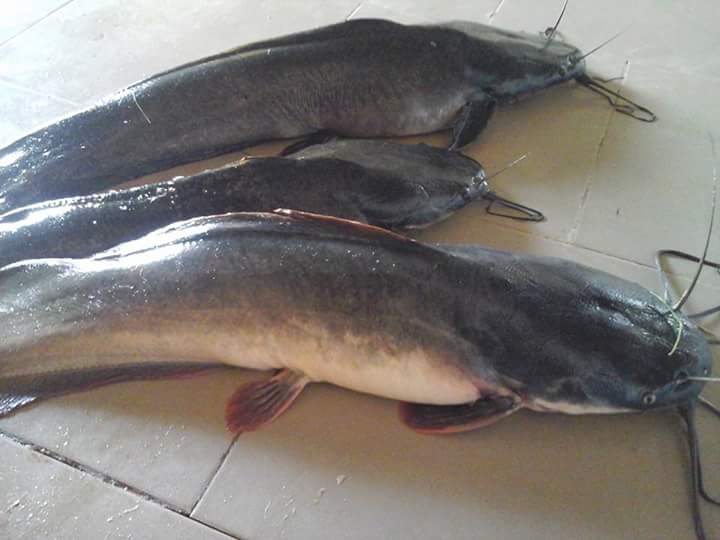
Medicated Feed Formulation for Catfish Infected With Diseases Caused By Bacteria
Feeding diseased fish is usually difficult because sick fish feed poorly, however administering medication through feed is generally the only suitable method you can use to administer drugs to fish culture in a medium or large scale production or in a culture facility like earthen pond, race-way, cage etc.
Antibiotics can be administered to large population of fish through feed. Based on my experience as a practicing aquaculturist / fish farmer who have been using medicated feed formulated in my farm and also for my client fish farmers, I have come to notice that some cat-fish farmers do not feed their fish during outbreak of certain diseases, while others limit feeding to certain days. If you want to find out if the reason is right or wrong? , I advise you to read this article to the end.

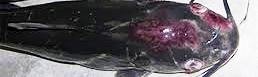
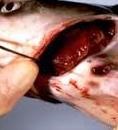
They are two (2) main antibiotics that i normally choose from when formulating medicated feed for fish that are affected by bacterial infection, both antibiotics are registered by the United State Food and Drug Administration (FDA) for the prescribe rate started below as you will see during the formulation process. The antibiotic are:
- Romet-30 ( Sulfadimethoxine-ormetoprim)
- Terramycin ( Oxytetracycline)
Romet which is an active antibiotic for control of Enteric Septicemia of Cat-fish (ESC) commonly called Hole-in-the Head disease (caused by the bacterium Edwardsiella ictaluri as shown in fig 2 above), during the medicated feed formulation, I add 5kg of romet-30 to 1 ton of finished feed at a feeding rate of 3% body weight or feed to satiation daily for 5 days. But if mortality does not decrease after treatment, additional sick fish should be diagnosed and additional period of 5 days of administering the medicated feed should be prescribe. A 3-days mandatory withdrawal period is required before fish can be sold out for consumption or slaughter.
Terramycin is a broad spectrum antibiotic for treating Aeromonas infections, ESC and systematic columnaris infection (as shown in fig 1, 2 & 3 above). When formulating the medicated feed, you add 22kg of Terramycin TM-100 premix per 1 ton of finished feed i.e 2.5grams of Terramycin TM-100 premix per 0.5kg when fed 1% body weight per day for a period of 7 to 10 consecutive days and 21 days withdrawal before sales or slaughter for consumption. Terramycin is heat-labile and it does not withstand the high temperature required to make floating feed, although research have shown that with the new cold extrusion process, Terramycin medicated floating feed can be produce. It can also be incorporated into sinking feed to become medicated since sinking feed is not expose to high temperature when compare with the floating feed during the manufacturing/compound process.
Base on my personal research /field observation, Terramycin medicated feed is primarily recommended for treating systemic columnaris infections or ESC infection caused by strains of E. ictaluri that are resistant to Romet.
When treating any type of fish diseases, the following principle should be stick to or put into consideration:
- Fish should be submitted for diagnosis as soon as any potential problems is observed because if disease outbreak are allowed to progress for a long period, fish may be too weak to feed and at such treatment with medicated feed will become useless.
- An accurate diagnosis of the specific disease(s) affecting the fish must be done before effective treatment can be carry-out.
- When administering medicated feed, all effort should be made to ensure that fish consume the feed to receive proper dose of antibiotics.
- Fish should be fed with medicated feed when dissolve oxygen concentration is high.
NOTE: In reference to the question in paragraph two (2) base on my experience and research it is advisable to fish farmers to now that feeding fish with medicated feed more than once a day and also feeding over a large portion of the fish culture holding facility (pond, tank, cage etc.) rather than in one area may also help increase consumption of medicated feed.
In conclusion have it in mind that when treating fish with medicated feed, losses of fish may not immediately reduce, even if detected early, because bacterial diseases may affect a portion of the fish in a pond to an extent that they will not consume feed. These fish normally will continue to die during and after treatment period but the remaining fish in the pond that consume the medicated feed have a good chance for recovery.
Nicholas Izekor is an Aquaculture Trainer at The Ark Shore Konsults (T.A.S.K.). He holds a Bachelor’s degree in Fisheries Management from the University of Benin, Nigeria.


Like!! Thank you for publishing this awesome article.
My brother recommended I might like this blog. He was totally right.
This post truly made my day. You can not imagine simply how much time I had spent for this
info! Thanks!
Also visit my blog: buy CBD
Took me time to read all the comments, but I really enjoyed the article.
It proved to be Very helpful to me and I am sure to all the commentators here!
It’s always nice when you can not only be informed, but also entertained!